In commercial real estate, there's a phrase you'll hear often:
Retail follows rooftops.
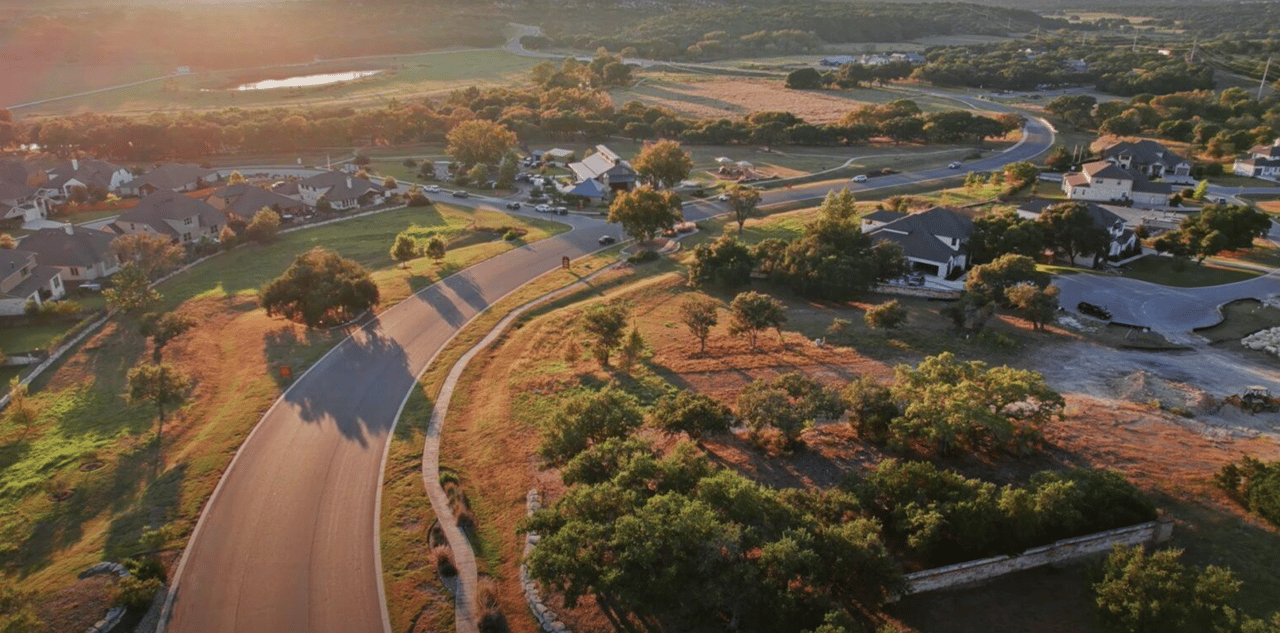
The idea is simple. As more people move into an area, demand increases for the businesses and services those households use every day.
That's one reason residential growth throughout Dripping Springs is important for anyone interested in local commercial real estate.
More Homes Can Mean More Customers
Think about everything a household needs within a typical week.
Groceries.
Coffee.
Restaurants.
Childcare.
Medical and dental care.
Fitness.
Pet services.
Professional services.
Entertainment.
Home maintenance.
The more households an area supports, the greater the potential customer base for many types of businesses.
Dripping Springs continues to have significant residential development planned or underway, meaning the relationship between rooftops and commercial demand will remain worth watching.
Double L Shows the Scale of Future Growth
One particularly significant project is the Anarene/Double L development.
Approved plans include 2,231 residences, 250 senior multifamily units, approximately 200 acres for commercial retail and office uses, land for a future school, and hundreds of acres of open space and parkland.
A project of that size illustrates why commercial investors shouldn't evaluate a property based solely on today's surroundings.
What's planned nearby may matter tremendously over a longer investment horizon.
Residential Growth Can Create Opportunity
As household counts increase, opportunities may emerge for businesses such as:
- Restaurants and coffee shops
- Medical and dental practices
- Professional offices
- Daycare and education
- Fitness and wellness
- Grocery and convenience retail
- Home services
- Entertainment
- Personal services
But population growth doesn't automatically make every commercial property a good investment.
The type of households, income levels, traffic patterns, competing businesses, access, visibility, utilities, and development costs all matter.
Follow the Roads Too
Rooftops are only part of the equation.
Transportation infrastructure plays a major role in commercial development.
A property may sit near thousands of homes, but if reaching it is difficult, its commercial potential could be limited.
Investors should pay attention to how new neighborhoods connect with major roads, where traffic is likely to flow, and where future commercial nodes may develop.
Commercial Development Is Already Following
The Highway 290 corridor continues to attract commercial attention.
Projects such as Headwaters Commercial and The Station at Headwaters illustrate the type of mixed retail, restaurant, office, hospitality, and entertainment development envisioned along the corridor.
As residential communities expand, these commercial destinations can help serve both existing and future residents.
What This Means for Landowners
If you own property along or near a growth corridor, understanding what's happening around you can be valuable.
A tract that historically had agricultural or residential appeal may attract different interest as surrounding development changes.
That doesn't mean every property should be developed or that future appreciation is guaranteed.
It does mean landowners should understand the larger picture before making a decision to sell, hold, lease, or develop.
What This Means for Investors
For investors, one of the most valuable questions is:
Where is demand likely to be several years from now?
Commercial real estate often requires thinking beyond today's conditions.
Tracking residential development, infrastructure, future land-use plans, traffic patterns, and commercial projects can provide useful context when evaluating opportunities.
Dripping Springs Is Growing—Strategically Evaluating That Growth Matters
There is no single formula for finding a good commercial investment.
But understanding where people are moving, where roads are being built, and where future commercial activity is planned can help investors ask better questions.
At NestHaven Commercial, we closely follow residential and commercial development throughout Dripping Springs and the surrounding Hill Country because the two markets are deeply connected.
Whether you're considering commercial land, an investment property, or a location for your business, we'd be happy to help you understand the local landscape.